
Supporting Agricultural Education
Arizona National has been a Phoenix tradition since 1948. But our commitment to agriculture extends far beyond five days in December. From a four-year-old riding a sheep for the first time to a college student managing show operations as an intern, we invest in agriculture education year-round and at every level. Every program, contest, and experience we offer reflects a shared belief: the future of agriculture depends on informed, skilled, passionate people.
The Farm Experience: Agriculture for Everyone
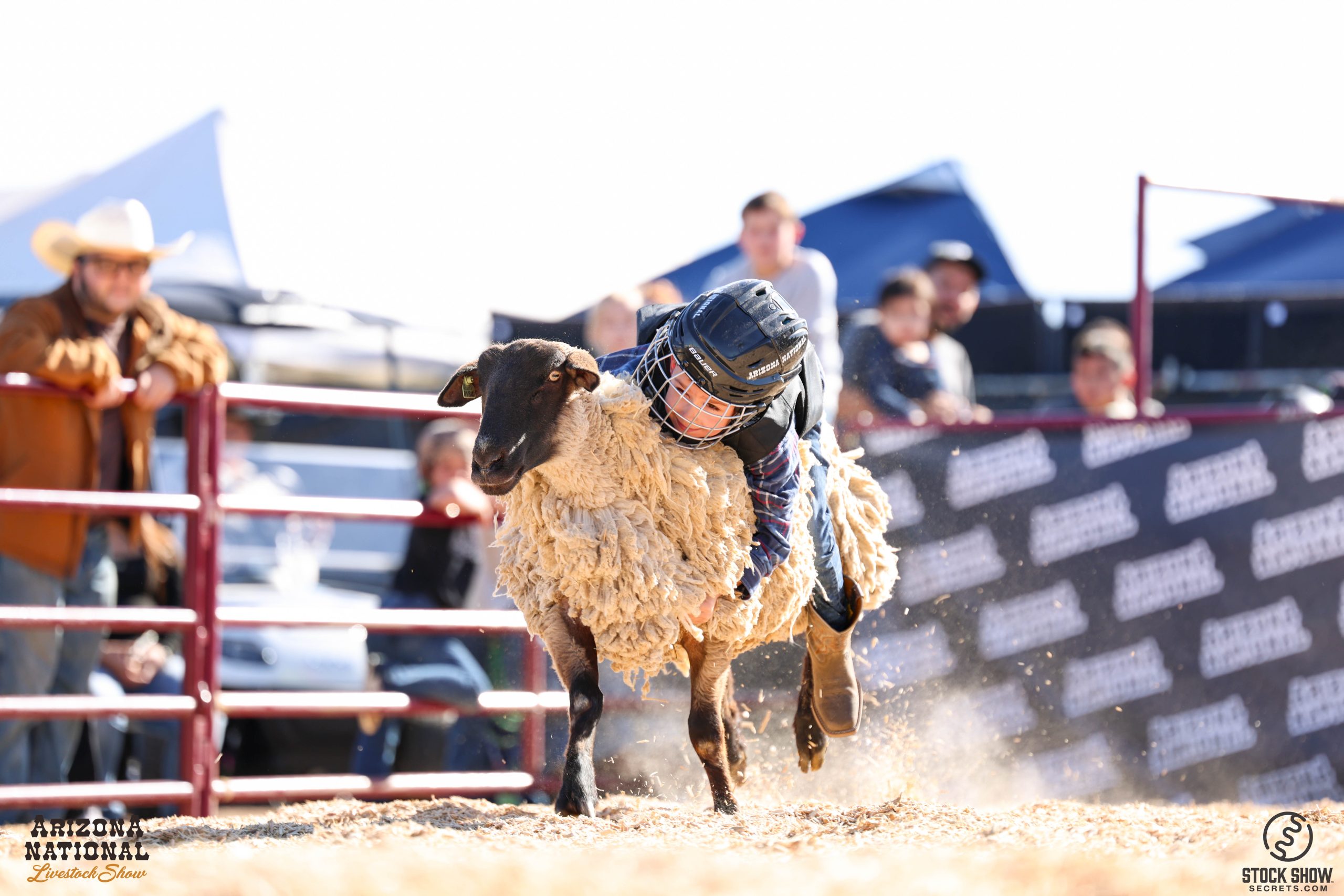
The Farm Experience is Arizona National's most accessible educational offering, designed to welcome families, school groups, and first-time visitors into the world of livestock and agriculture. Held each day of the show, the Farm Experience brings hands-on learning to life in an arena setting.
Activities include the Wrangler Roundup (ages 3-9), Pedal Tractor Pull (ages 4-12), Lil' Buckaroo Rodeo mutton busting (ages 4-6), Goat Scramble, Dummy Roping, and both Breakaway and Team Goat Roping. Farm Experience staff are on hand throughout to share facts about livestock, agriculture, and ranch life with everyone in the arena.
Every child who attends receives a copy of the Arizona National Activity Workbook, a curriculum-style resource covering animal meat cuts, livestock brand history and how to read them, livestock terminology, DNA and genetics in livestock production, careers in the livestock industry, and machines used in modern agriculture. It is designed to be engaging whether a child grows up on a ranch or has never set foot on one. Approximately 300 young people participate in Farm Experience programming across the run of the show each year.
Learn More ↗Coloring Book Series
Arizona National has developed an original series of illustrated coloring books designed to introduce the youngest visitors to the world of livestock shows through character-driven stories. Each book follows a junior exhibitor and their animal through the Arizona National experience, with genuine agricultural education woven into every page.
The current library includes four titles. Hammer Goes to Arizona National follows a Hampshire pig and his owner from a snowy farm up north to the Arizona National show ring, covering biosecurity, livestock nutrition, breed identification, and showmanship. Stella Loses Her Tag is a missing-tag mystery set across the Arizona National grounds that teaches children about scrapie identification requirements and animal traceability, two topics central to responsible livestock ownership. The Luckiest Show Goat in the World is based on a true story, following a young girl and her market goat from his first day of halter training through the emotional goodbye at the end of the show and an unexpected reunion three years later. It handles the full arc of a market animal's life with honesty and care. Steve's Big Rodeo Dream follows a show steer who slips loose at night and discovers the Ranch Rodeo steers warming up in the arena, learning through his new friends that there is more than one way to be part of Arizona National.
Three new titles are in development for the 2026 show, featuring Arizona National's stockdog competition, Ranch Rodeo, and breeding cattle program with a focus on the cow-calf division. The series is distributed at the Farm Experience and is designed to be taken home, extending the agricultural conversation long after the show ends.
Farming Simulator: Where Technology Meets Agriculture
Most young people who visit Arizona National have seen a tractor. Very few have ever had to decide when to plant, what to feed, how to manage a herd, or what happens when the weather does not cooperate. The Farming Simulator tournament changes that. Using the Farming Simulator video game series, participants step into the role of a working farmer, managing crops, livestock, equipment, and the real competing demands of agricultural production. It is immersive, competitive, and genuinely educational.
Free to enter and open all three days of the show, it is one of the most accessible ways we know to spark agricultural curiosity in young people who are growing up further from the farm than any generation before them. Approximately 100 participants take part each year. Agriculture feeds the world. Understanding how it works matters. This is a start.
Farming Simulator ↗Youth Competitions: Building Knowledge Through Competition
Arizona National hosts one of the most comprehensive rosters of agricultural knowledge and skills competitions of any livestock show in the Southwest. What distinguishes these contests from simply showing an animal is that they require a competitor to understand agriculture, not just participate in it. To place a class of livestock, a competitor must know what traits predict performance, which body characteristics translate to a desirable end product, and how to compare and communicate those differences clearly. To complete a skill-a-thon station, they must demonstrate hands-on knowledge of nutrition, animal health, breed characteristics, and farm equipment. To win a welding or tool ID contest, they must be fluent in the physical tools that keep agricultural operations running. These are not supplemental activities layered on top of a livestock show. They are the agricultural curriculum.
Thanks to the generous support of the Kemper and Ethel Marley Foundation, entry fees are waived for the Livestock Skill-A-Thon, Horse Skill-A-Thon, Livestock Judging, Horse Judging, Prepared Public Speaking, FFA Creed Speaking, 4-H Creed Speaking, Tool Identification, and Ag Mechanics contests.
Before any junior exhibitor competes, they are also required to complete a state or national Youth Quality Assurance training program. This is not optional. Every single junior competitor at Arizona National arrives having received foundational education in animal care, food safety, and ethical livestock practices. It is a baseline of agricultural literacy built into the fabric of the show.
Judging Contests
Junior Livestock Judging Contest — Arizona State Qualifying Contest. Competitors evaluate and rank classes of cattle, swine, sheep, and goats, then defend their placings in oral reasons. Junior college livestock judging coaches serve as reasons takers, creating direct collegiate recruiting exposure for participants.
Junior Horse Judging Contest — Same format applied to halter and performance horse classes. Open to 4-H, FFA, and organized equestrian club members from any state.
Post-contest educational clinics are held following each judging contest to help competitors understand scores, improve technique, and deepen their understanding of the evaluation process. A competitor who walks out of a judging clinic understands not just where they placed an animal, but why the industry values specific traits, how those traits relate to production efficiency and meat quality, and how to articulate that knowledge under pressure.
Livestock Judging ↗ Horse Judging ↗Skill-A-Thon Contests
Junior Livestock Skill-A-Thon — Arizona State Qualifying Contest. Competitors rotate through individual and team stations covering livestock nutrition, breed identification, hands-on veterinary care, and other applied agricultural topics.
Junior Horse Skill-A-Thon — Same format for equine topics.
Free study guides for both the Livestock and Horse Skill-A-Thons are published on our website well in advance of the show, giving competitors across Arizona the tools to prepare. The knowledge tested in the Skill-A-Thon is not trivia. It is the applied science of raising animals for food and fiber. A competitor who can identify a deficiency symptom, select the correct nutritional supplement, or properly restrain an animal for treatment has gained knowledge that functions directly in the agricultural workplace, and equally in the classroom. Research consistently shows that hands-on competitive learning reinforces academic understanding; students who work through real livestock health scenarios, feed ration problems, and equipment identification can more readily apply what they are learning in animal science coursework because they have already encountered it in a practical setting.
Livestock Skill-A-Thon ↗ Horse Skill-A-Thon ↗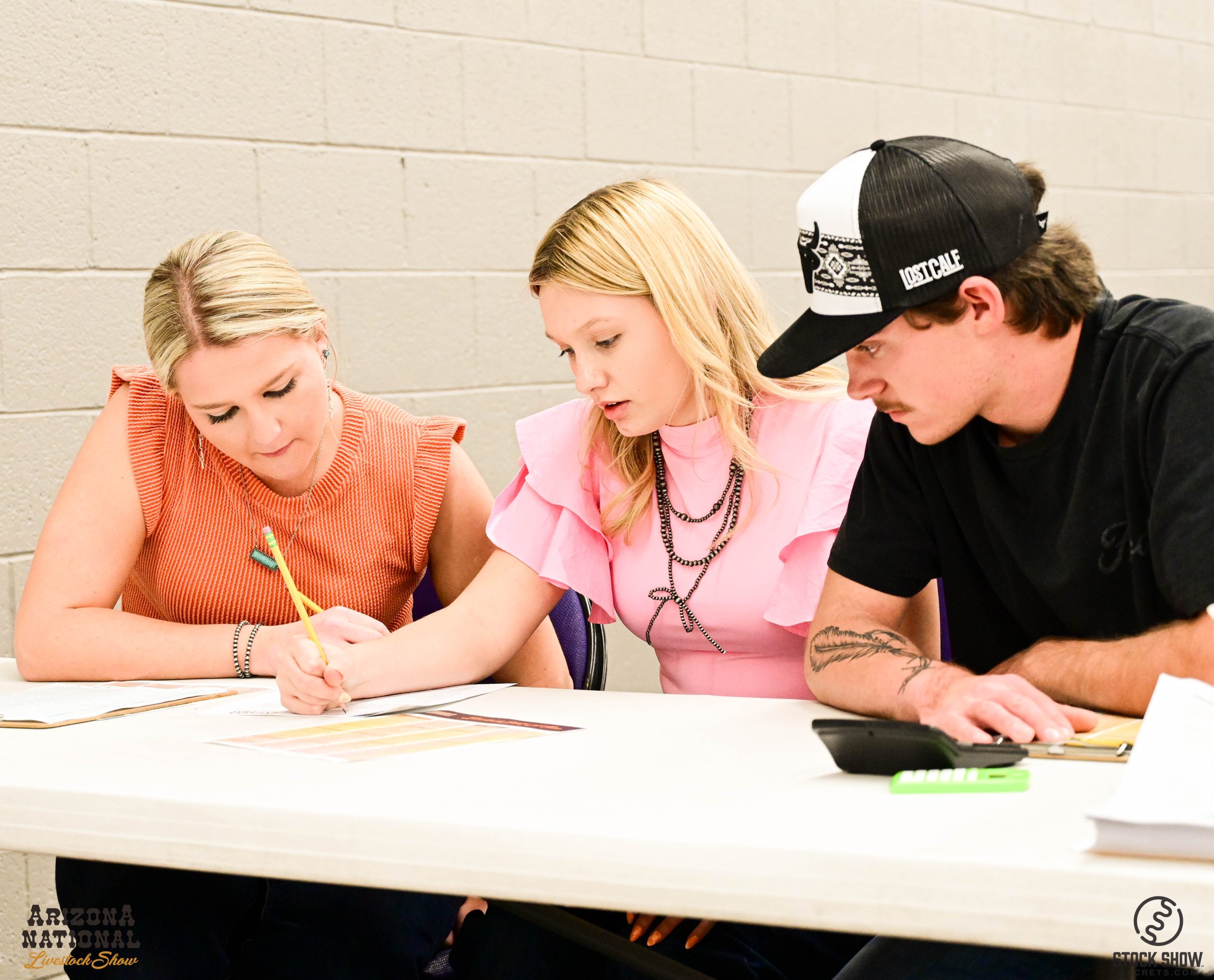
Team Fitting Clinics and Contests
Before each fitting contest, Arizona National hosts a free clinic open to novice through advanced exhibitors, covering technique, appropriate use of grooming equipment, and animal presentation standards. Contests are held for cattle, sheep, goat, and swine, with junior (ages 8-13) and senior (ages 14-19) divisions. Sponsored by Weaver Livestock and Sullivan Supply.
The agricultural education embedded in fitting is often underappreciated by those outside the industry. To fit an animal well, a competitor must understand its anatomy and physiology at a detailed level. They must know which structural characteristics the judge is evaluating, because those characteristics directly reflect the animal's merit as a future food product. Muscle expression, skeletal correctness, volume and dimension — these are not aesthetic preferences. They are indicators of yield, quality, and efficiency that determine the value of livestock in a production context. A competitor who learns to present an animal to its best advantage is, in practice, learning to read and evaluate livestock the same way a producer or buyer does. Fitting teaches the relationship between what an animal looks like and what it produces, which is one of the most foundational concepts in livestock agriculture.
Learn More ↗Speaking Contests
Prepared Public Speaking — Competitors deliver original 6-8 minute speeches on agricultural topics including agribusiness, animal systems, plant systems, environmental services, food products and processing, and natural resource systems. Evaluated using the National FFA Prepared Speaking Rubric. Open to anyone 20 and under from any state. The agricultural topics are not incidental to the contest format; they are the point. A student who researches, writes, and publicly defends a position on a topic in animal production or food systems develops both a deep understanding of the subject and the ability to communicate it persuasively to a general audience. These are the skills that produce the next generation of agricultural advocates.
FFA Creed Speaking — Open to Greenhand FFA members from any state currently enrolled in an agricultural education class.
4-H Creed Speaking — Open to 4-H members from any state, junior and senior divisions.
Learn More ↗Ag Mechanics, MIG Welding, and Tool Identification
Ag Mechanics Contest and Silent Auction — Competitors submit projects in ornamental welding, woodworking, and metal fabrication. Best of Show is auctioned at the Show Dedication, with proceeds benefiting the Arizona National Scholarship Fund. The agricultural connection is direct: farms and ranches run on fabricated metal, repaired equipment, and functional infrastructure. A young person who can weld, build, and identify the tools of agricultural mechanics is developing skills the industry genuinely needs and cannot outsource. Equally important, the research on hands-on learning consistently shows that students who engage in physical, applied work develop a stronger grasp of the underlying academic content. A student who builds something learns the principles behind it in ways that a classroom lecture alone cannot replicate.
MIG Welding Contest — Competitors weld pre-cut animal silhouette parts using provided MIG equipment, judged on bead consistency, penetration, weld appearance, and structural alignment.
Tool Identification Contest — Competitors identify 100 agricultural tools and supplies in 15 minutes. A study guide is published at aznational.org/tool-identification.
Ag Mechanics ↗ MIG Welding ↗ Tool ID ↗Video Contest
Launched to extend Arizona National's educational reach beyond show week, the Video Contest invites competitors 20 and under to produce short-form social media videos portraying livestock showing and production in a positive light. Submissions are judged on relevance, educational content, clarity, and originality. Top-scoring videos are shared across Arizona National's social media platforms, giving young producers a real audience for their agricultural storytelling.
Showmanship
Every junior exhibitor at Arizona National is automatically entered in Showmanship at no charge. Divided into junior, intermediate, and senior age divisions across beef, swine, sheep, and goat, Showmanship evaluates how well an exhibitor presents and handles their animal in the ring. Because participation is automatic rather than optional, Showmanship represents one of the highest-participation educational touchpoints at the show, putting every junior competitor through a structured evaluation of their agricultural competency regardless of whether they sought out the experience.

The agricultural education in Showmanship runs deeper than handling technique. To present an animal effectively, a competitor must understand the animal's anatomy and how its structural characteristics relate to its value as a food product. The judge in a showmanship class is evaluating the live animal against an ideal that is defined, ultimately, by what that animal will yield in a production context. A showman who positions their animal to highlight its muscling, skeletal structure, and overall balance is demonstrating working knowledge of animal science: what the ideal looks like, why it matters, and how to communicate it. Understanding movement and how to read an animal's behavior under pressure, recognizing which structural features the judge is prioritizing and why, knowing how to set an animal up to show its strengths, these skills are built on a foundation of applied livestock knowledge that serves competitors far beyond the show ring.
Beyond Show Week
Arizona FFA State Leadership Conference
For five consecutive years, Arizona National has participated in the Arizona FFA State Leadership Conference, held annually in Tucson at the Tucson Convention Center and Centennial Hall. The conference brings together approximately 1,500 FFA members from across the state each June for workshops, leadership development events, and competitions.
Our presence includes a vendor booth and a hands-on workshop that gives participants a direct preview of what Arizona National has to offer. Students get a sample of livestock and horse judging competition, work through elements of the Skill-A-Thon contests, and learn about the opportunities available to them at the show. Approximately 350 students interact with Arizona National at each conference. For many of these students, this is their first direct experience evaluating live livestock or working through applied agricultural knowledge stations. The workshop brings the content of the show to students before the show begins, lowering the barrier to entry and building the agricultural knowledge base that makes a first year at Arizona National more meaningful.
AZ FFA SLC ↗Study Guides
Free study guides for the Livestock Skill-A-Thon, Horse Skill-A-Thon, and Tool Identification contests are published on aznational.org ahead of each show. These guides are substantive agricultural curriculum. The Skill-A-Thon guides cover breed identification across major livestock and equine species, nutritional requirements and feed composition, common health conditions and their treatments, equipment identification and proper use, and meat evaluation principles. The Tool ID guide covers the implements used in agricultural mechanics, from welding and fabrication tools to general farm repair equipment. A student who works through these guides before arriving at the show has completed a meaningful survey of applied agricultural science, whether or not they ever compete.
Educational Clinics
In addition to the post-contest clinics held after each judging contest during show week, Arizona National hosts educational clinics in the off-season. These events are announced through our website and social media channels.
Livestock and horse judging is widely regarded as one of the most comprehensive educational experiences in agricultural youth programming, and the clinic format is where the deepest learning happens. To understand why, it helps to understand what judging actually demands.
In a judging contest, a competitor evaluates a class of four animals, ranks them from best to worst, and then stands before an official and defends that ranking out loud in two minutes of timed oral reasons. They cannot use notes. They must demonstrate not only that they see the animals accurately, but that they can organize their observations, apply correct species-specific terminology, weigh major differences against minor ones, acknowledge the strengths of lower-placed animals, and communicate all of it clearly under pressure. Every class is a live exercise in critical thinking, animal science knowledge, public speaking, and the confidence to defend a decision to someone who may disagree.
Post-contest clinics are where that feedback loop closes. After the contest results are released, officials walk through the official placings with competitors, explaining what distinguished the top animals from the bottom, what the class rewarded and why, and where common errors in evaluation or reasons delivery occurred. Competitors learn not just whether they were right or wrong, but how experienced evaluators think through the same classes they just judged. For many participants, this debrief is more valuable than the competition itself.
Arizona National's off-season judging clinics go further, providing structured practice in a lower-stakes setting where participants can slow down, ask questions, and work on specific weaknesses with experienced coaches. The clinic is open to novice, intermediate, and advanced participants, making it one of the few programs in Arizona that serves a complete spectrum of experience levels in the same setting. Novice participants learn the fundamentals of livestock evaluation from the ground up. Intermediate participants work through class dynamics and reasons structure. Advanced participants focus on refining the precision and terminology of their oral presentation. The off-season clinic is co-hosted in partnership with the University of Arizona, extending the reach of collegiate expertise into the junior competitor community and creating a direct line of connection between high school-age judgers and the collegiate programs that may recruit them.
Social Media: Sharing Agriculture's Story
Arizona National reaches more than 544,000 followers across TikTok, Facebook, Instagram, and YouTube. But the numbers are secondary to the purpose. Every video, post, and story we share is a window into livestock production, ranch life, and agricultural careers for an audience that largely lives far from the farm. We show what it looks like to raise a market animal from start to finish. We share the skill and knowledge behind livestock judging. We put faces on the ranchers, exhibitors, and youth who make agriculture work. For many of our followers, Arizona National is their primary ongoing connection to where their food comes from.
In recent years, our combined media presence reaches more than 4.6 million people across social platforms, TV, print, and online articles. That is not a marketing number. It is a measure of how many people we are bringing into a conversation about American agriculture that they might not otherwise be having.
We also offer a Video Contest that invites young producers to create their own short-form agricultural content, giving the next generation of advocates a platform to tell agriculture's story in their own voice.
Facebook ↗ Instagram ↗ TikTok ↗ YouTube ↗Investing in Arizona's Agricultural Students
Scholarship Program
Since 1991, Arizona National has awarded more than $1,495,700 in scholarships to 1,125 recipients. The program awards approximately $75,000 annually, with year-over-year growth in both applicants and awards. Scholarship recipients have represented 17 home states, with funds sent to schools in 23 states.
The agricultural education impact of the scholarship program shows up in where recipients go and what they do. A review of scholarship recipients reveals concentrations in animal science, agricultural education, agricultural economics, pre-veterinary programs, agribusiness, range management, and agricultural communications. Recipients have gone on to careers as livestock judging coaches, agricultural educators, FFA advisors, nutritionists, and industry professionals. Taylee Velasquez, a 2022 recipient from Bloomfield, New Mexico, competed on the livestock judging team at Texas Tech University while maintaining a 4.0 GPA, served as a livestock intern at Arizona National, and went on to pursue graduate study in small ruminant nutrition. Tanner Baker, a 2025 recipient from northern Arizona, made the President's List in his first year at Western Texas College while pursuing a degree in animal science with a focus on dairy nutrition. Taylor Rolan, pursuing her degree in animal science at New Mexico State University, is expanding her brahman cattle herd while studying genetics and nutrition. Macy Rosselle is pursuing agricultural law at Oklahoma State University with a focus on water law and ranch reorganization. These are not peripheral careers. They are the professional pipeline of American agriculture.

In 2026, Arizona National expanded the program to include Trade School Scholarships, recognizing that agriculture and our communities depend on skilled professionals as well as college graduates. The new track supports students pursuing diesel mechanics and ag mechanics programs, welding and fabrication certifications, electrical and plumbing apprenticeships, and other skilled trade pathways.
Proceeds from the Ag Mechanics Silent Auction, held each year at the Show Dedication, contribute directly to the scholarship fund.
Apply for a Scholarship ↗Rose Mofford Award
Established in 1978 by former Arizona Governor Rose Mofford, a lifelong supporter of agriculture and Arizona National, the Rose Mofford Award recognizes the Outstanding Arizona Junior Exhibitor each year. Governor Mofford created the award after noticing the absence of recognition specifically for Arizona youth on their home stage. She personally designed the buckle presented to each recipient. The award is selected through a competitive application and interview process evaluating leadership, community involvement, commitment to agriculture, and academic achievement. It is not given for placing first in the show ring. It is given for embodying the values that make the livestock industry worth passing on: work ethic, integrity, service to others, and dedication to agriculture as a way of life. The recipient receives a buckle and a $1,000 award.
Learn More ↗Travel Awards and University Support
Arizona National provides travel awards for the champion Arizona 4-H Livestock Judging and Skillathon judging teams as they travel to their respective national competitions. We also formally sponsor the University of Arizona Meats and Livestock Judging teams, supporting students who represent Arizona at the collegiate level. The University of Arizona's animal sciences program prepares graduates for careers in production agriculture, veterinary medicine, animal nutrition, extension, and agricultural research. The UA's meat science program specifically trains students in meat processing, quality evaluation, and food safety, skills essential to the livestock industry's supply chain. Arizona National's support of these teams is an investment in the collegiate pipeline that feeds the agricultural workforce. The students on those teams are the future nutritionists, extension agents, ranch managers, and industry leaders who will sustain Arizona agriculture for the next generation.
Internship Program: Real Experience for Future Leaders
Each year, Arizona National welcomes college students from across the country for hands-on internships in event management, animal welfare, equine operations, photography, videography, communications, and more. On average, approximately 45 interns from over 20 colleges and universities across 15 states participated in the program, including students from the University of Arizona, Arizona State University, Texas A&M, and Oklahoma State University.
The agricultural education embedded in the internship program is most visible in the Animal Welfare track. Arizona National's animal welfare interns work directly with livestock throughout the show, learning biosecurity protocols, health assessment, proper handling and restraint, drug-free show compliance, and veterinary care standards in a real production environment. Virtually all of Arizona National's animal welfare interns are pursuing or preparing for veterinary school, and Arizona National partners with Midwestern University's Doctor of Veterinary Medicine program to provide pre-veterinary students with applied experience they cannot get in a classroom. A future veterinarian who has worked with thousands of animals at a major livestock show during their undergraduate years arrives at veterinary school with a depth of practical agricultural experience that gives them a meaningful advantage.
Interns work in eight roles during show week: Photography, Videography, Livestream, Operations, Communications, Graphic Design, and Horse and Animal Welfare. The Animal Welfare track alone places on average 10-11 interns with direct livestock management responsibilities, ensuring every animal is cared for to the highest standard while students learn best practices in real time.
Arizona National internships are a professional launching pad. Students leave with industry connections, a media portfolio or event management experience, and a much deeper understanding of what it takes to run one of the Southwest's largest livestock shows.
Apply for an Internship ↗Preserving Arizona's Ranching Heritage
Arizona National has a long and proud relationship with the Pioneer Stockmen Association, an organization dedicated to honoring the ranching families who built the livestock industry in Arizona. We host the annual Pioneer Stockmen Association Luncheon at the show and have worked to preserve and share the association's histories in lasting ways.
The Pioneer Stockmen histories are detailed, family-level accounts of Arizona ranching across generations, covering the economics of livestock production, the development of Arizona's rangelands, the role of the livestock industry in shaping the state's communities and politics, and the daily realities of working cattle, sheep, and horse operations from the territorial period through the modern era. They document immigrant families who built ranching empires from nothing, cattlemen who shaped national agricultural policy, and ranching women who held operations together across decades. These are primary source documents about an industry that contributes more than $2 billion annually to Arizona's economy, written by the people who built it. Arizona National has published these histories on aznational.org and donated print copies to school libraries in rural communities across the state, specifically to reach students in agricultural areas who benefit most from seeing their own heritage documented and valued.
The histories of Arizona's pioneering ranching families have been published online at aznational.org and donated in print to several school libraries across the state. It is one small way of ensuring that the stories of Arizona agriculture do not disappear, and that future generations have access to the roots of this industry.
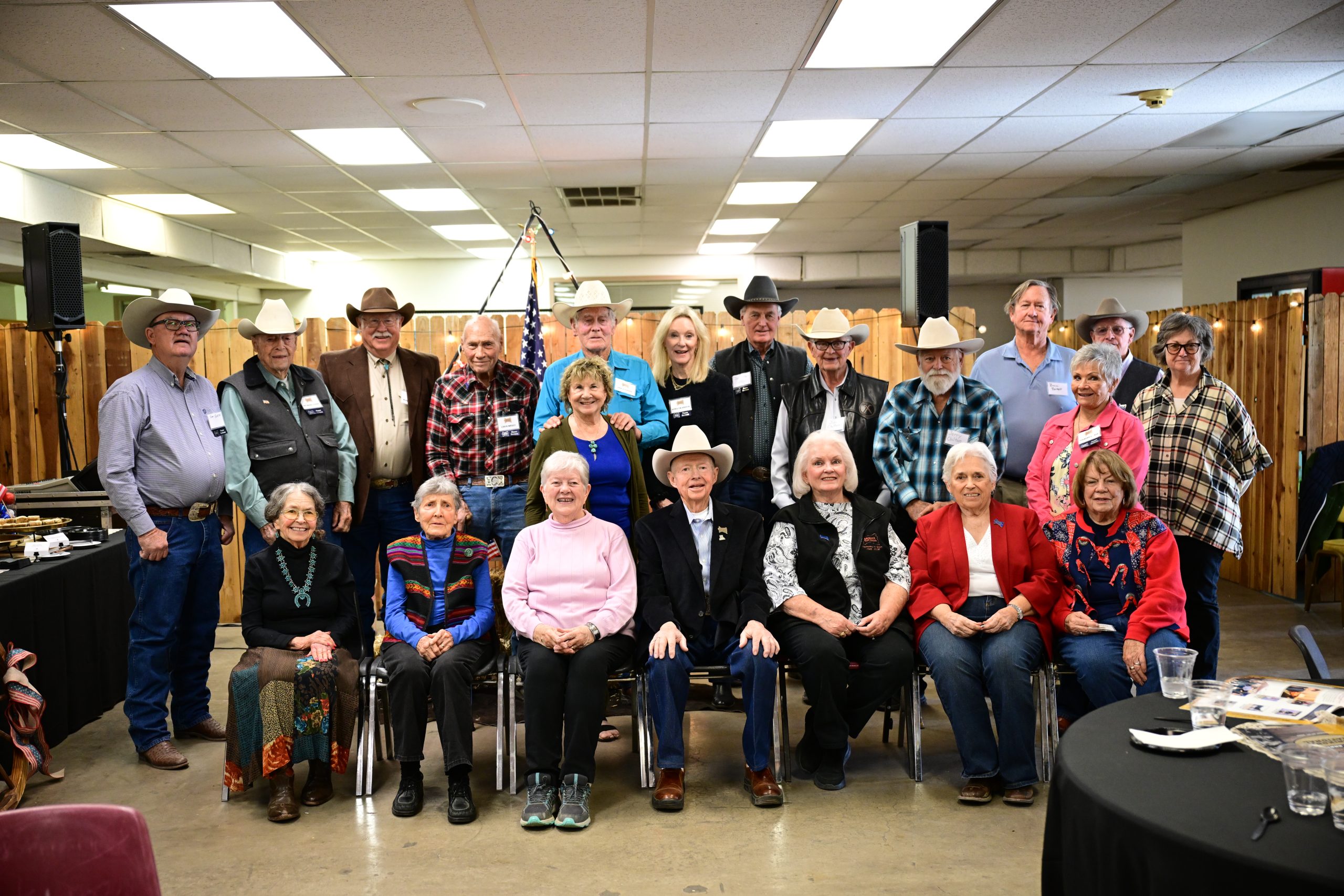
Education, for us, is not only about preparing young people for what comes next. It is also about connecting them to what came before. The ranching families documented in the Pioneer Stockmen histories built the agricultural infrastructure that still sustains Arizona today. Their stories are agricultural education in the truest sense: not a textbook account of how livestock production works, but a human account of why it matters and what it costs to sustain it across generations.
Read the Histories ↗We are grateful to the Kemper and Ethel Marley Foundation for their generous support of Arizona National youth educational programming. Thanks to their partnership, entry fees are waived for the following contests, making these opportunities accessible to every competitor regardless of their financial circumstances.